
Blog / Evervale Blog / F1 Hybrid Cannabis Seeds
F1 Hybrid Cannabis Seeds

On store shelves, the word F1 works like a bright sticker on a box of technology: it catches the eye, sounds tech-savvy, and promises “the next level.” Stable, uniform, and high performance are usually mentioned alongside. It’s easy to assume that F1 is almost a quality mark that doesn’t need to be deciphered.
However, F1 is not a distinguishing mark or a sales reward. It is a breeding term that refers to the first generation of offspring produced through controlled crossbreeding of two genetically distinct parent plants or lines. It doesn't guarantee that the product will be "better," "stronger," or the same in every way. However, it does provide insights into the questions that should be asked next.
This article is not about how to obtain F1 seeds. Instead, it focuses on reading labels without being overly trusting or skeptical. Let's explore!
What does F1 even mean?
F1 stands for first filial generation, which is the first generation of offspring. In plant breeding, it refers to the result of a controlled cross between genetically distinct parents or lines.
The key word here is "controlled." The origin of the offspring should not be a mystery, like "something was crossed with something else at some point." The chosen parent lines and the clear logic of the cross itself are important for a meaningful F1 designation.
This does not automatically make F1 superior to other categories. The term does not answer questions about the quality of a particular batch, sustainability, composition, or future properties of the product. It does, however, convey one important message: you are dealing with the first generation of a specific breeding combination.
Simply put, F1 is not a product review, but rather a concise representation of its lineage.
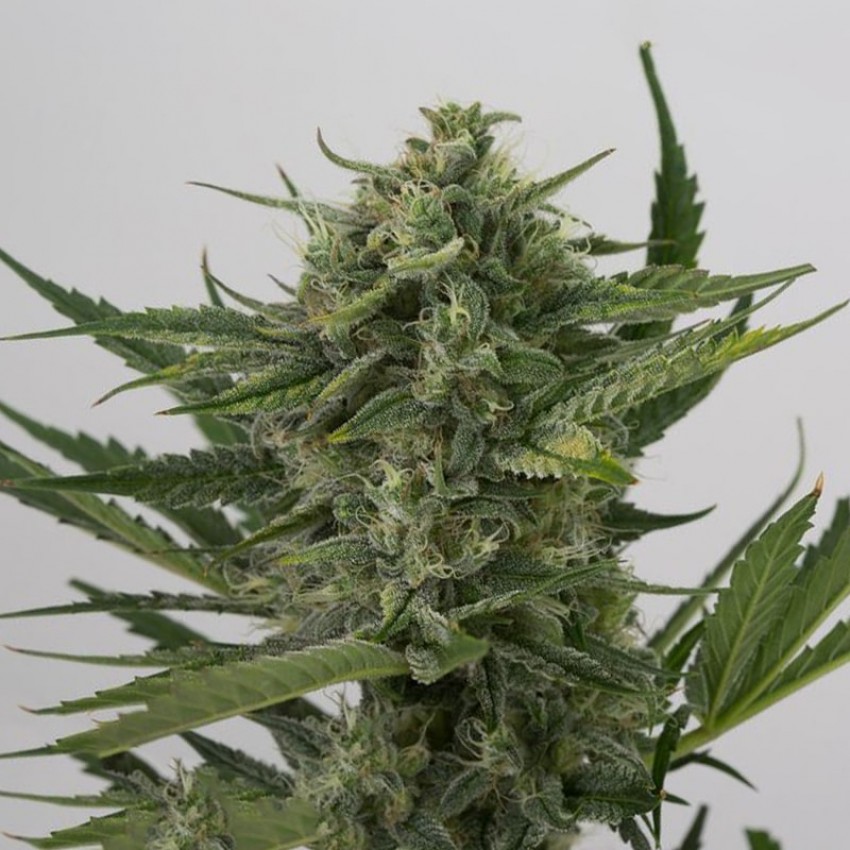
Why isn't every hybrid an F1?
The word hybrid is used widely: it can refer to a product that has been crossed. However, it does not specify the generation of the product, the documentation of the parents, or the confirmation of the lineage.
F1 is a more precise term. Every declared F1 hybrid is a hybrid, but not every hybrid can be accurately referred to as F1. It is like the difference between the words "car" and "electric car": the latter includes the former, but adds specificity that needs to be verified.

Where do these discussions about homogeneity and hybrid power come from?
F1 is often associated with greater uniformity and hybrid vigor, or heterosis. Both ideas are not made up, but both are easily turned into promises that are too broad.
Heterosis is a phenomenon in which hybrid offspring may outperform their parent lines in certain traits. The key word here is "may." It does not have to. Not always. Not on all counts.
In 2024, a study on specific F1 cannabis combinations showed improvements in uniformity and productivity-related metrics in the studied material. This confirms that designed combinations can provide measurable benefits. However, it would be too bold to extend this result to every position with F1 in its name.
When a description promises that F1 is "always more stable," "always stronger," or "always superior to its parents," it's important to take a step back. Breeding is not a coffee machine with a "make it perfect" mode. There are a lot of variables.
What should I look for in an F1 seed card?
A normal card doesn't have to display the entire breeding archive. First, look at what the brand is claiming. There's a difference between "hybrid line" and "documented F1 hybrid." The former is broader, while the latter requires a clearer foundation.
Then, check if there's information about the parent lines or at least the selection process. The full names of the parents may not always be disclosed, as it could be part of the commercial information. However, the lack of context weakens the claim. It's a good sign when the manufacturer explains what is confirmed in the product and what remains a general description.
Separately, check if the data is being replaced by epithets. Advanced, elite, next-gen, and superior can be part of the marketing language. They are not equal to the description of controlled crossbreeding or verifiable characteristics.
And pay attention to consistency. If the F1 line is stated in the catalog, the same logic should be followed in the product card, FAQ, and B2B materials. When the product is "real" on one page

Five questions that help you quickly weed out the "junk"
1. Does the term have a specific meaning? Is it clear what the company means by F1: the first generation of controlled crossbreeding, or simply a successful blend of genetics?
2. Is there basic information about the origin? It is not necessary to wait for a complete breeding map. However, it should be clear that the parents and the process of selecting lines are not just a decorative legend.
3. What claims can be verified? Homogeneity, heterosis, and other characteristics should be described carefully and with context. Absolute promises without data are a weakness.
4. Are F1 and generic hybrid confused? If these words are swapped without explanation, the term is likely to be used carelessly.
5. Does the product have clear documentation?A line description and consistent wording do not make a product "perfect." However, they provide a reasonable basis for comparison.
This checklist is useful to avoid choosing between two extremes: "F1 is always better" and "F1 is pure marketing." Sometimes, it is a legitimate breeding term. Other times, it is just three characters.
Red Flags- Where F1 Ends and Advertising Begins
"Maximum homogeneity." Homogeneity should refer to specific parameters and have a context. Without it, it's not a fact, but rather a sentiment in the text.
"Hybrid strength is guaranteed." Heterosis can manifest itself in individual traits, but it is not a guaranteed outcome for every line.
"True F1 without compromises." The useful question here is: what data confirms the F1 status?
"The best offspring from the best parents." This is an advertising formula. She doesn't mention anything about controlled breeding or the quality of the documentation.
Mini-checklist: Comparing F1 without unnecessary drama
1. Read how the product is named: F1 or just hybrid.
2. Find information about the origin, parent lines, or the principle of crossbreeding.
3. Check if there is a distinction between verified data and figurative descriptions.
4. See if the card promises universal results.
5. Check the terminology against the FAQ, B2B materials, or other brand pages.
It's more honest not to look for the "best F1" by one label. A product looks stronger when it has a clear origin, consistent description, and accurate language.
The main thing to remember is
F1 is a term from breeding: the first offspring of a controlled cross between genetically different parent lines. It can be associated with potential uniformity and manifestations of heterosis, but it does not provide a universal guarantee of the properties of a particular product.
Therefore, it is important to look beyond the designation. It is more significant how consistently the brand explains the origin of the line, what data it is ready to confirm, and where the fact ends and the advertising description begins.
F1 should neither be deified nor dismissed as marketing noise. It is enough to read it as a technical statement that must be supported by evidence.
Category
Evervale Blog
Reading Time
3 Min
Published
-
Other Articles
More articles are coming soon.